Views: 0 Author: Site Editor Publish Time: 2025-08-20 Origin: Site


Load and lifting height
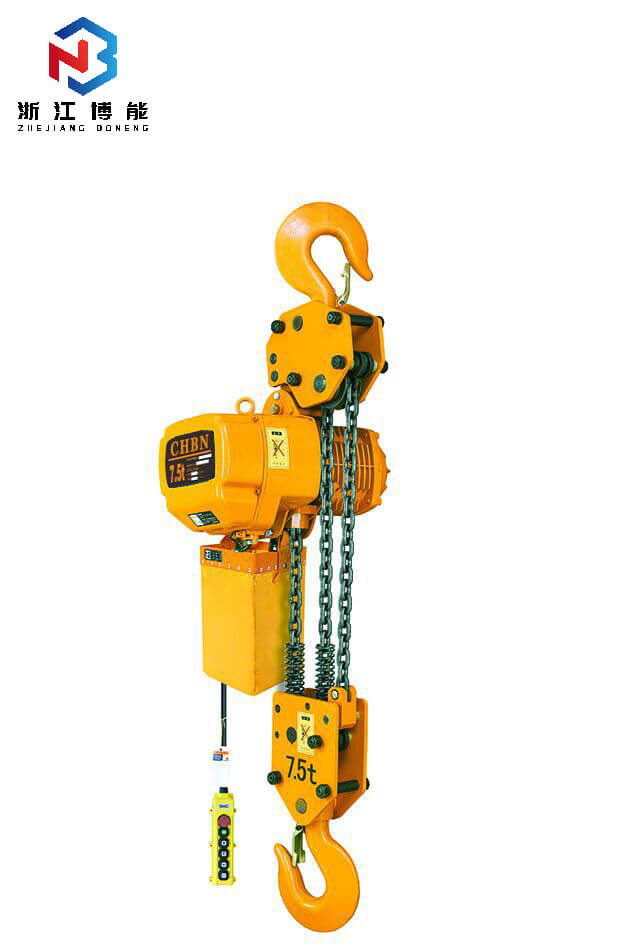
Chain hoist:It is more suitable for low to medium loads (usually a few to dozens of tons) and medium lift heights (e.g., within 10 meters). The chain is strong and has relatively flexible length adjustment, making it suitable for situations where precise control of the lift height is required.
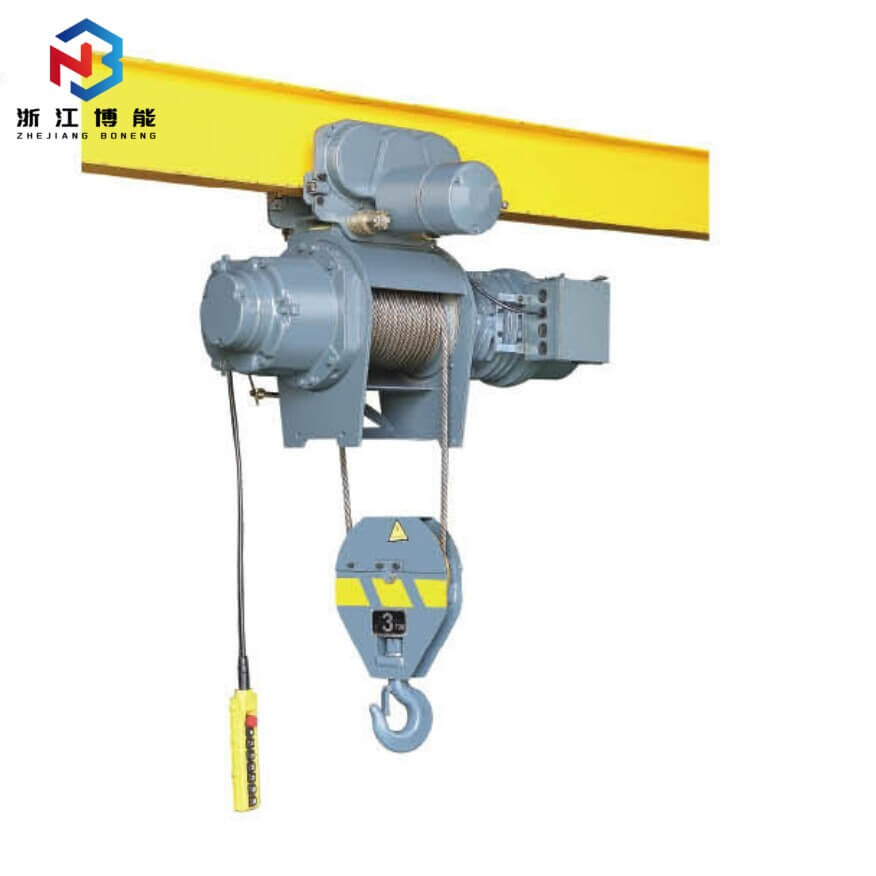
Wire rope hoist: It is more advantageous when working with high loads (tens to hundreds of tons) and high lifting heights (e.g., over 10 meters). The wire rope is flexible and can adapt to longer lifting distances, and a single wire rope can withstand greater tension.
2. Work Environment
Chain hoist:The chain is resistant to dirt and dust, and the chain structure is not easily stuck by small amounts of dust and debris, making it suitable for dusty environments such as workshops, warehouses, and mines. However, the chain is prone to rust, so anti-corrosion models (such as galvanized chains) should be selected for humid or corrosive environments.
Wire rope hoist: It is afraid of foreign objects getting entangled (such as impurities getting stuck in the wire rope may cause wear), but it is more durable in humid and high temperature environments (such as outdoor open-air operations), and the surface of the wire rope can be treated with rust prevention, which makes it more adaptable.
3. Operating frequency and accuracy
Chain hoist:It has a slow operating speed and good stability when lifting and lowering, making it suitable for operations that require precise alignment (such as equipment installation). However, when used frequently, the chain wears relatively quickly and requires more frequent maintenance.
Wire rope hoist: The lifting speed is fast, which is suitable for scenarios that require efficient operations (such as docks and logistics handling); but the inertia is large when running at high speed, and precise control is slightly more difficult.
4. Installation and space
Chain hoist:The chain is light in weight and compact in size, making it suitable for installation in limited spaces (such as narrow workshops). The chain can be stored easily without taking up extra space.
Wire rope hoist: Because it contains structures such as a reel, it has a large volume and weight, and is suitable for installation on a fixed track or gantry with ample space, and has higher requirements for the installation load-bearing capacity.
5. Maintenance costs
Chain hoist:The chain needs to be lubricated regularly and checked for breakage or deformation. Maintenance is relatively simple and the cost of replacing the chain is low.
Wire rope hoist: The wire rope needs to be checked regularly for broken wires and wear, and attention needs to be paid to the drum and guide pulley during maintenance. The cost and complexity of replacing the wire rope are slightly higher.
Summary and Recommendations
For small and medium loads, dusty environments, and where precise operation is required →chain hoists are preferred.
For large loads, high lifting heights, high-frequency and efficient operations, and humid/open-air environments →wire rope hoists are preferred.